24/7 Emergency Bat Removal
North Shore Bat Removal
The Critter Team provides professional North Shore, TX bat removal services for residential and commercial properties. Founded in 2015 by Mike Garrett, our veteran-owned company holds NWCOA Bat Standards Certification and is a Ridge Guard Certified Installer, specializing in bat exclusion, guano cleanup, and attic restoration. We have been recognized as a Nextdoor Neighborhood Fav and rated 4.6 stars across 67+ Google reviews. All work is backed by a written warranty. We answer the phone 24 hours a day, 7 days a week, including holidays.

The Critter Team
6942 FM 1960 Rd E, Suite 211
Humble, TX 77346
(281) 667-0171

Schedule An Inspection!
Click To Contact
Our Bat Removal Services in North Shore, TX
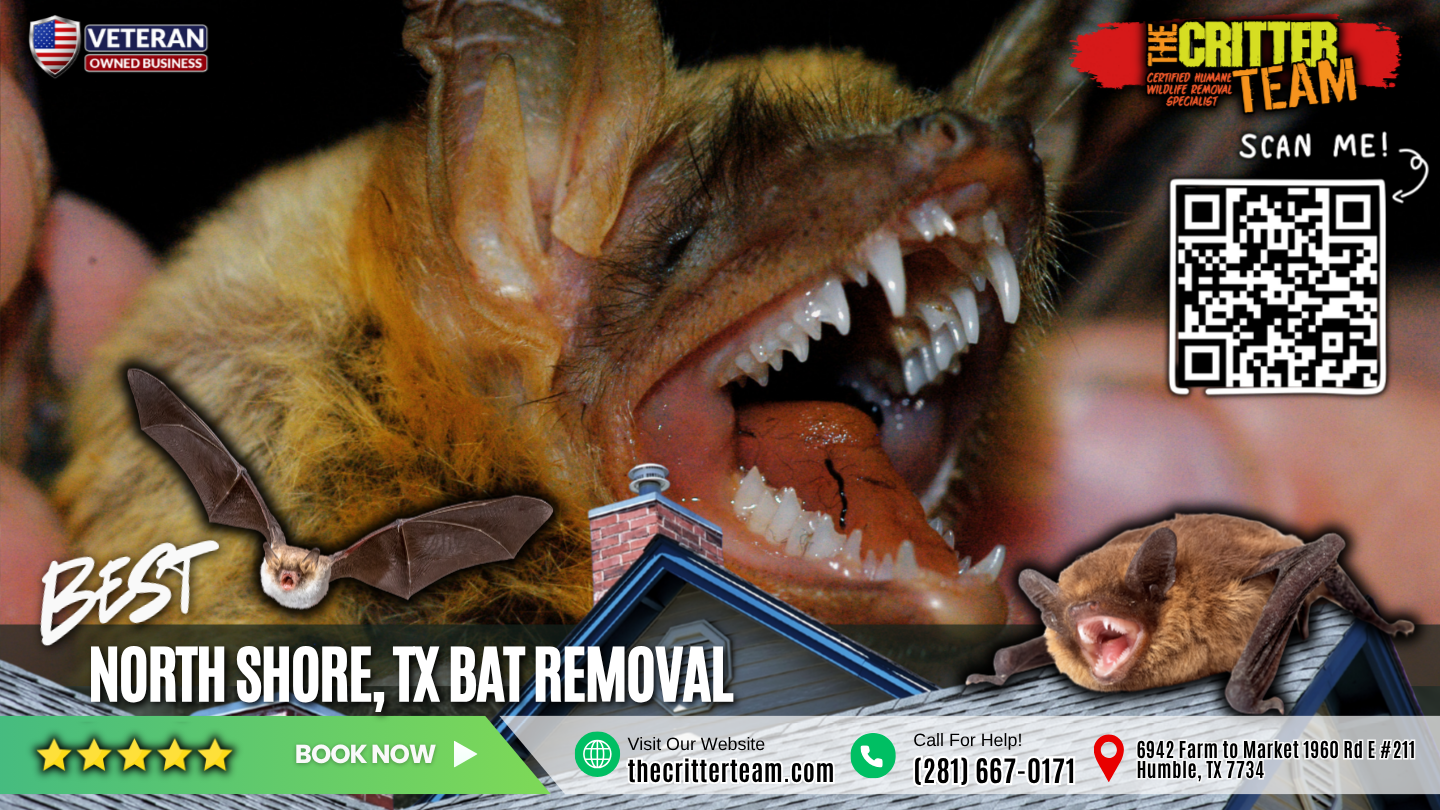
We are the bat removal team for North Shore, Texas homeowners, and we have been working in this area since 2015. Our service area covers homes across North Shore and the surrounding Harris County area. The mature canopy and brick-trim fascia common across local homes create the slip-points where Mexican free-tailed bat colonies move in.
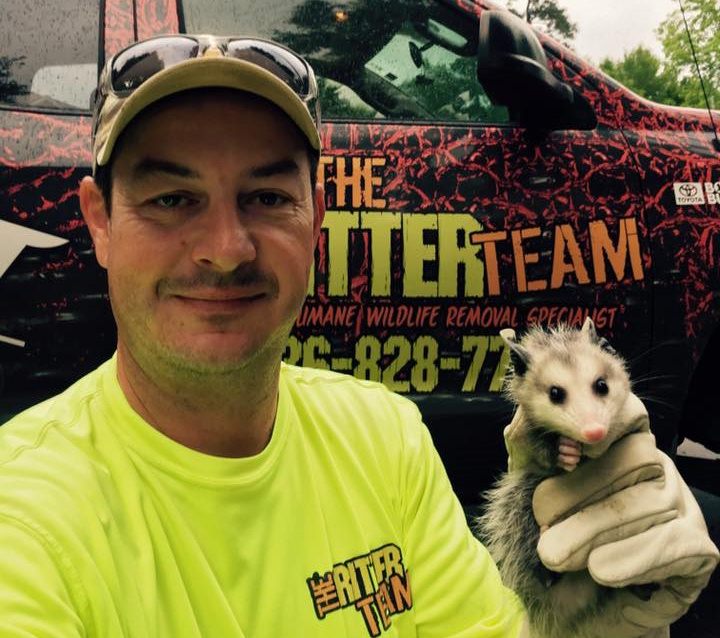
Our owner is Mike Garrett, a retired U.S. military veteran. We are NWCOA Bat Standards Certified, a member since 2016, and Mike completed the NWCOA Wildlife Control Operator Training Course early in our company’s history.
Every technician on our North Shore crew is a Ridge Guard Certified Installer, a Bird Barrier Certified Installer, and holds Advanced Metal Fabrication Certification. We are licensed and insured for nuisance wildlife removal in Texas, with $1 million per occurrence general liability and full workers’ compensation. Every exclusion job we complete in North Shore comes with a written warranty.
We run our work in-house from inspection through final exclusion. The technician who walks your attic is the same one who installs the one-way valves, fabricates the metal at the job, runs the cleanup, and signs off on the warranty.
The Critter Team Company Overview
| Category | Detail |
|---|---|
| Company | The Critter Team |
| Owner | Mike Garrett, Owner and Founder |
| Military Background | Retired United States Army veteran |
| Texas License | Texas-licensed nuisance wildlife removal operator |
| NWCOA Certification | Bat Standards Certified (member since 2016) |
| Additional Certifications | Ridge Guard Certified Installer, Bird Barrier Certified Installer, Advanced Metal Fabrication, Wildlife Control Operator Training Course |
| Team | In-house technicians: Jeff, Julio, Tad, Chris. Office Manager: Victoria Garrett |
| Insurance | $1M per occurrence general liability, $2M aggregate, full workers’ comp |
| Reviews | The Critter Team Reviews |
| Guarantee | Written warranty on all exclusion work (1-year and 3-year options). Free re-service if wildlife returns through our work. |
| Founded | June 2015 – veteran-owned and operated family business |
Health Risks From Bats in North Shore
Bats in North Shore attics carry two real health concerns we want homeowners to understand before approaching a colony or attempting any cleanup.
The first is rabies. Only a small percentage of bats carry the virus, but a bite from an infected bat is the leading source of human rabies cases in the United States. The CDC describes rabies transmission risks from bats in residential settings, including the warning that bites from bats can be too small to feel or see. Any direct contact with a bat in a bedroom or living space should trigger a medical follow-up.
The second is histoplasmosis. Bat guano supports the growth of Histoplasma capsulatum, a fungus that becomes airborne when dried droppings are disturbed. A guano accumulation in an attic, especially one that has been undisturbed for months, can release spores into the air during any cleanup attempt. Inhaling those spores can cause flu-like respiratory symptoms in healthy adults and more serious lung infections in immunocompromised people.
Beyond disease, the structural impact of a long-term bat colony in a North Shore attic includes saturated insulation, stained ceiling drywall from urine seepage, and a strong ammonia odor that travels into living spaces through HVAC ductwork. The longer the colony stays, the more the cleanup adds to the total job cost.
We handle every bat job in full PPE: respirators, eye protection, and full-body coverage. The vacuum hoses we use for guano cleanup run through soffit access or roof access, so we keep the contamination out of your living space.
Bats in North Shore
The dominant bat species we find in North Shore attics is the Mexican free-tailed bat, the same species that forms the famous Congress Avenue Bridge colony in Austin. A maternity colony in a North Shore home can range from a dozen bats to several hundred, depending on the size of the attic and how long the colony has had access.
Mexican free-tailed bats are insectivores that emerge at dusk and travel several miles to feed over open water and pasture. The mature canopy across North Shore gives the bats their travel corridors back and forth from Galveston Bay.
The most common entry point we see in North Shore homes is the fascia board that trims the brick at gable ends. The bats slip behind the fascia where it meets the brick veneer, then climb up into the attic. Other common entry points we find are gable louvers with damaged screens, ridge vent edges where the seal has lifted, and corners of soffit returns.
Guano stuck to a window pane is one of the clearest signs in our experience. The droppings stick because the bats cluster directly above the window and defecate on their way out at dusk. A pile of droppings on the driveway directly under an eave is the same signal.
We see two seasonal patterns in North Shore. Spring is when colonies arrive and the females start raising pups. Late summer through early fall is when the year’s pups are flying on their own and the colony is at its largest. The maternity blackout period set by Texas Parks and Wildlife covers May 1 through August 15.
Signs of a Bat Problem
Bat colonies in North Shore attics leave a specific set of signs that are different from the squirrels, raccoons, or roof rats we also handle in this area. The signs you will notice first depend on the size of the colony and how long it has been in the structure.
- Bats visible at dusk: bats circling out of an eave, soffit corner, or gable louver as the sun sets – that is the active exit point
- Guano stuck to a window pane: small dark pellets stuck to the outside of a window directly below the entry point
- Droppings piled on the driveway or patio: a heap of dry, crumbly pellets directly under an eave, often with a glittery look from insect parts
- Dark staining at the entry point: body oils from the bats squeezing in and out leave a brown smudge on the brick or fascia
- High-pitched chirping or squeaking: a colony in the wall void produces faint chirps, especially around dawn and dusk
- Ammonia smell in the attic: a heavy ammonia odor inside the attic, strongest in summer when the colony is largest
If you only see one or two bats and never see them in the same place twice, you may have a transient roost rather than a colony. Our inspection confirms whether the activity is a single roosting bat or an established colony before we start any work.
Bat Removal and Exclusion
Every bat job we run in North Shore follows the same five-step rhythm, and our crew handles every step.
- Inspection. We walk the exterior from foundation to roofline, then we inspect the interior including the attic. We document every active exit point, the colony size, and the extent of guano accumulation.
- Bat removal. We install one-way valves at every active exit point so the colony can leave at dusk and cannot return. We monitor the structure until the colony has fully cleared, which usually takes one to two weeks depending on weather and colony behavior.
- Cleanup and decontamination. We remove and bag saturated insulation. We treat surfaces to neutralize residual ammonia and contamination. Our vacuum hoses run through soffit or roof access, which keeps the cleanup out of your living space.
- Damage repair. We address stained drywall, damaged fascia, and any wood damage from the colony on the same job, alongside related work like our North Shore raccoon removal repairs when raccoon and bat issues overlap in the same attic.
- Wildlife proofing. We seal every animal entry point the colony used. Bats squeeze through quarter-inch openings, so the seal closes every gap that size or larger across the roofline. We use copper or stainless steel mesh on weep vents, 23-gauge aluminum fabricated on-site at soffit-to-roof transitions, clear sealant at tight seams, and galvanized powder-coated covers on roof vents.
The work has to happen outside the May 1 through August 15 maternity blackout window when females are raising flightless pups. The TPWD nongame species regulations covering bats in Texas set the legal framework we follow.
Every exclusion job carries a written warranty. We set warranty length in writing at the start of the job, based on the scope of the seal-up work.
Bat Prevention and Wildlife Proofing
Long-term prevention in North Shore comes down to keeping the structure tight at the openings bats can use. Walking the perimeter of your home in daylight after a storm or after roof work is the easiest way to spot the entry points that develop over time.
- Fascia-to-brick joints: a quarter-inch opening behind the fascia where it meets the brick veneer is the most common entry point we see in North Shore homes
- Gable louvers: the screen behind the louvered vent should be intact, and the louver itself should sit flush in the framing
- Ridge vent seals: ridge vents that have lifted at the edges create a continuous slot bats can slip into
- Soffit returns and corners: the corners where soffit panels meet a roof transition are weak points that age open over time
- Roof penetrations: AC line penetrations, plumbing vents, and other roof transitions need flashing seals that have not lifted with sun damage
Bat exclusion work is timing-sensitive in a way other species are not. Sealing the structure during the maternity blackout traps flightless pups inside, which produces a much worse problem than the original colony. Fall is the right window for proactive bat work in North Shore, after the year’s pups are flying and before winter slows the colony down.
If you suspect a colony has moved in but the maternity window is still open, we can still inspect, document the activity, and schedule the exclusion for the first available date after August 15. Professional animal proofing on the schedule the law allows is the right approach for bats specifically.
Frequently Asked Questions
How can I tell if I have bats in my North Shore attic without going up there?
Stand outside your home at dusk and watch the eaves, gable corners, and soffit lines. Bats fly out within the first 20 minutes after sunset, usually one at a time from a single exit point. Guano stuck to a window or piled on the driveway under an eave is another clear sign. If you see either, that is the active exit point and that is where we start the exclusion.
Why can’t bat work be done during the summer in North Shore?
From May 1 through August 15, female bats are raising flightless pups inside attics and wall voids. Sealing the structure during that window traps the pups inside. The adults will tear at the structure trying to get back, and the cleanup becomes much worse than the original colony. Texas Parks and Wildlife treats this period as a do-not-exclude window for bat work.
How long does a North Shore bat exclusion take from start to finish?
The active exclusion phase, where one-way valves are in place and the colony leaves on its own schedule, usually takes one to two weeks depending on weather. Cleanup, damage repair, and the final seal-up follow that. Most full bat jobs we run in North Shore are completed within three to four weeks from the first inspection to the final warranty signoff.
Will the bats come back next year if you exclude them now?
Not through the openings we seal. Our exclusion uses copper mesh, fabricated aluminum, and galvanized covers across every animal entry point a bat could use along the roofline. The written warranty covers our seal-up work, so if a bat finds its way back through a sealed location, we come back at no charge to address it.
Is the cleanup really necessary if the bats are already gone?
Yes. Bat guano supports a fungus called Histoplasma that becomes airborne when the droppings are disturbed. A colony that left months ago can still leave a contamination footprint that releases spores during any HVAC work, attic insulation work, or future inspection. Decontamination protects the home long after the bats are gone.
Our Nuisance Bat Removal Process
Our NWCOA Bat Standards-certified process identifies every entry point on the structure, removes the colony through humane one-way exclusion, and seals the building to prevent bats from ever returning.
-
Step 1: Full Property Inspection
We inspect the full roofline from the fascia-to-brick gap to the ridge vents, checking chimneys, gable vents and soffit-to-roof pockets where colonies enter. We photograph guano deposits, urine staining and every active entry point, then walk you through our findings and lay out the exclusion plan.
-
Step 2: Humane Bat Exclusion
We seal the entire home using high-grade sealant, Ridge Guard, hardware cloth and custom metal fabrication, closing every gap except the main points the colony is actively using. Those openings are then fitted with one-way excluders that let the bats fly out at dusk but prevent them from getting back in.
-
Step 3: Cleanup Services
We remove all accumulated guano and urine-soaked insulation, containing the debris carefully so nothing spreads into your living space during the removal process. The attic is then fully sanitized and treated for odor, clearing out every trace of contamination the colony left behind.
-
Step 4: Damage Repair
Guano and urine break down insulation and saturate the drywall underneath, staining ceilings and degrading the materials over time. Our technicians replace the damaged insulation, repair the soiled drywall and restore every affected surface, returning your attic to its original condition.
Our Service Areas
We service all of North Shore, Texas for bat removal including the neighborhoods and communities of Woodforest, New Forest, Songwood, Holiday Forest, Cimarron, Wood Bayou, Hidden Forest, and Pine Trails. Our coverage runs north of the Houston Ship Channel and east of Loop 610, along the Greens Bayou corridor with Market Street and Wallisville Road as the main arteries.
Main Service Areas: Atascocita, Conroe, Kingwood, Humble, Crosby, Houston, Porter, Summerwood, Huffman, New Caney, Splendora, Mt. Houston, Highlands, Cloverleaf, North Shore, McNair, Dayton, Kenefick, Patton Village, Cleveland, Plum Grove, Mont Belvieu, Woodbranch, Grangerland, Cut and Shoot, Lake Conroe, Liberty, Porter Heights, Kings River Village, Kings Lake Estates
Why Homeowners Choose The Critter Team
Homeowners choose us because we are honest about what we find. If your problem does not require an expensive treatment, we will tell you that. We are not going to recommend work you do not need, and we are not going to quote you a price without inspecting your property first.
We do quality work with quality materials, and we take the time to do it right. When the job is done, your home looks like we were never there. Every technician is a company employee who answers directly to owner Mike Garrett, and every exclusion job is backed by a written warranty.
If wildlife gets back in through our work, we come back at no charge. That is the commitment, and it is in writing.
Our Certifications & Credentials
The Critter Team holds NWCOA Bat Standards Certification - the national standard of practice for wildlife control operators performing bat exclusion work. This certification requires specialized training in bat biology, exclusion techniques, safe handling protocols, and adherence to the NWCOA Code of Ethics. Mike Garrett has been an NWCOA member since 2016.
Additional credentials include Ridge Guard Certified Installer and authorized distributor for the North Houston Metro Area, Bird Barrier Certified Installer, Advanced Metal Fabrication Certification for wildlife exclusion and animal proofing, and Wildlife Control Operator Training Course completion through NWCOA. The Critter Team is licensed and insured for residential and commercial wildlife removal in Texas and carries $1 million per occurrence in general liability, $2 million aggregate, and full workers' compensation coverage.



Rated 4.6 out of 5 stars

based on 67+ reviews on Google listings.
Ready For FastSafeReliable Bat Control?
Tell us what you’re hearing, seeing, or smelling. We will handle the rest.