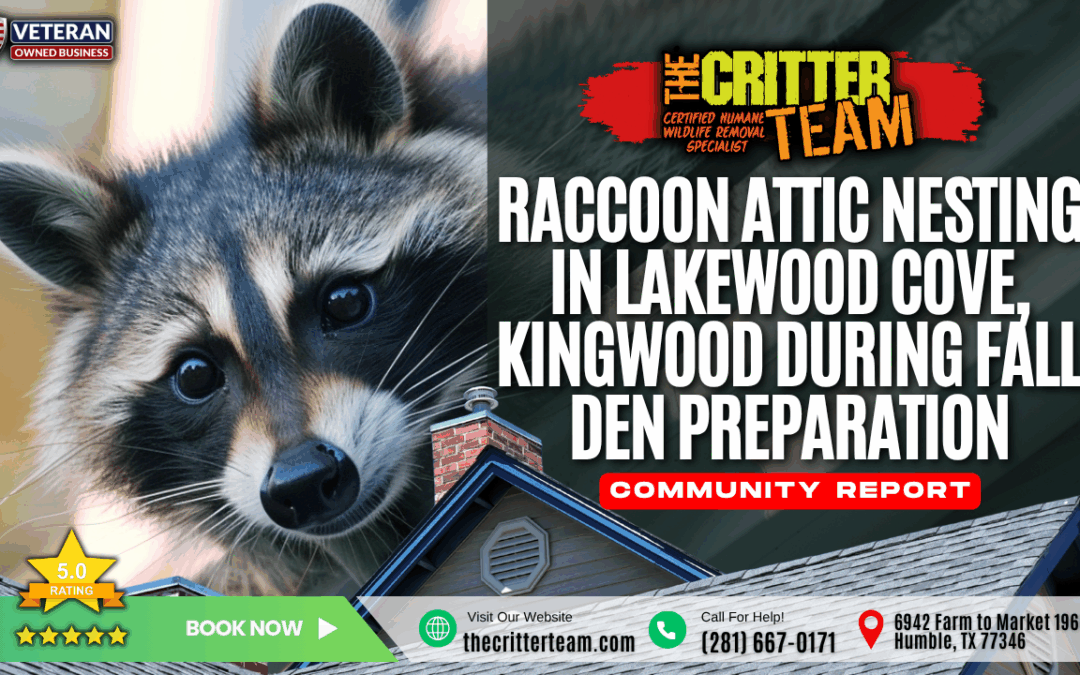
In Lakewood Cove, Kingwood, TX, raccoons often seek quiet, protected spots like attics during fall to prepare for winter denning. They are attracted by warmth, shelter, and what they perceive as safe nesting areas. Signs include noises, droppings, or damaged insulation. If unchecked, raccoons can cause structural damage and well-being threats. Homeowners can learn effective prevention, removal, and repair strategies for a safer, raccoon-free attic environment.
Article Highlights
- Raccoons in Kingwood, TX seek attic nesting sites during fall to prepare for winter, especially in neighborhoods like Lakewood Cove.
- Signs include noise, droppings, damaged insulation, and visible entry holes around roofs or vents.
- Structural damage and health risks increase as raccoons build nests and burrow in attic insulation.
- Prevention involves sealing entry points, trimming trees, and removing attractants like food waste around Lakewood Cove homes.
- Professional wildlife removal is recommended if raccoon activity persists or young raccoons are present during fall nesting.
Why Raccoons Choose Attics During Fall
As fall approaches, raccoons often seek out attics as a safe and warm environment for shelter. Their behavior during this time is driven by the need for a secure nesting site to prepare for winter. Raccoon nesting habits involve selecting areas that provide protection from the elements and predators.
Attics offer an ideal location because they are elevated, concealed, and insulated, making them attractive during colder months. Raccoons are opportunistic and adapt their nesting behaviors based on available resources. In fall, they typically gather nesting materials and establish a den in attics to rear their young or to hibernate temporarily.
Their natural instincts to find a protected space influence their choice of attics, which mimic their preferred natural habitats. Overall, raccoon behavior in fall reflects a focus on survival, utilizing attics as a reliable shelter to endure the changing seasons.
Recognizing Signs of Raccoon Activity in Your Home
Recognizing signs of raccoon activity in a home is important for property owners, especially during fall when raccoons seek shelter. Raccoon behavior often leaves clear evidence around the house and attic.
Noticing raccoon signs early helps prevent attic damage and health risks.
- Damage to attic insulation – Raccoons typically burrow through insulation, creating uneven or disturbed areas.
- Noises in the attic – Scratching, scurrying, or thumping sounds indicate movement within walls or ceilings.
- Odors – A strong, foul smell from the attic or near entry points suggests raccoon presence and accumulated waste.
- Entry points – Visible holes or gaps around roof vents, soffits, or chimney chases are common raccoon entry sites.
Property owners should be attentive to these signs, as they reveal raccoon behavior and the likelihood of nesting in attic insulation.
Early recognition allows for timely intervention, preventing further damage and health hazards.
The Risks of Raccoon Nests in Attics
Raccoon nests in attics can present several risks to homeowners. They may spread diseases, cause structural damage, and create noise or odors inside the home.
Addressing these issues quickly is important to protect health and property.
Disease Transmission Risks
What are the health hazards associated with raccoon nests in attic spaces? Raccoon behavior and urban wildlife habits can lead to the spread of diseases through their nests. These nests often contain pathogens that present risks to residents.
Key concerns include:
- Leptospirosis – bacteria from raccoon urine can infect humans through contact with contaminated surfaces.
- Roundworms – raccoons shed parasitic eggs in their droppings, which can cause serious health issues if ingested.
- Rabies – although rare, raccoons can transmit rabies through bites or scratches.
- Salmonella – bacteria present in raccoon feces can lead to food poisoning or other illnesses.
Understanding raccoon behavior and their role as urban wildlife helps mitigate these disease transmission risks.
Structural Damage Concerns
The presence of raccoon nests in attic spaces can present significant risks to the structural integrity of a home. Raccoon behavior, driven by their need for shelter and urban wildlife adaptability, often leads them to burrow into attic insulation and wooden framing. This activity can weaken support beams and compromise roofing structures.
| Risk Type | Description |
|---|---|
| Structural Weakening | Damage to rafters, joists, and support beams over time |
| Insulation Damage | Raccoon nests destroy insulation, reducing energy efficiency |
| Material Deterioration | Chewing and clawing accelerate decay of building materials |
| Entry Point Damage | Raccoons create larger openings, increasing vulnerability |
Noise and Odor Issues
Why do raccoon nests in attics often lead to noise and odor problems? Raccoons are active animals, generating loud noises through scratching, thumping, and vocalizations. Their presence also produces strong odors from urine, feces, and decaying organic material.
To manage these issues, several strategies are effective:
- Noise Mitigation: Installing soundproof barriers or insulation helps reduce raccoon noise transmission.
- Scent Masking: Using natural repellents or deodorizers can lessen the strong odors associated with their nests.
- Ventilation Improvement: Proper attic ventilation disperses odors and minimizes buildup.
- Timely Removal: Removing raccoon nests promptly prevents odors from intensifying and reduces ongoing noise disturbances.
These measures help homeowners maintain comfort and prevent long-term problems associated with raccoon nests.
Effective Preventative Measures for Homeowners
Homeowners can reduce raccoon activity by sealing all potential entry points around the house.
Trimming trees near the home can prevent raccoons from accessing the roof, while storing food securely reduces attractants.
Implementing these measures helps protect the home from raccoon nesting during fall.
Seal Entry Points
Sealing entry points is a crucial step in preventing raccoons from nesting inside attics. Properly sealing gaps and openings stops raccoons from gaining access.
Homeowners should focus on:
- Inspecting the roofline for damaged or loose shingles and flashing.
- Checking soffits, vents, and chimney areas for gaps or holes.
- Sealing cracks in the foundation and around utility penetrations.
- Using durable materials like steel mesh or caulking to close identified entry points.
Effective sealing requires attention to detail and the use of appropriate materials. It’s necessary to confirm all potential entry points are securely closed.
This process reduces the risk of raccoons entering the attic and prevents future nesting. Regular inspections help maintain the seal over time.
Trim Nearby Trees
Trimming trees and branches that are close to or overhanging the roof is an important step in preventing raccoons from accessing an attic. Proper tree trimming involves removing low-hanging branches and trimming back trees that are near the house to eliminate easy entry points.
Branch removal can prevent raccoons from climbing onto the roof or attic vents. Homeowners should focus on cutting back branches at least 6 to 10 feet away from the structure.
Regular tree trimming reduces the likelihood of raccoons using branches as pathways to reach the roof. Maintaining clear space around the home is a simple yet effective preventative measure.
Proper branch removal and tree trimming not only deter raccoons but also promote the health of nearby trees.
Store Food Securely
Storing food securely is a key step in preventing raccoons from being attracted to a home. Proper food storage and pantry organization reduce accessible food sources.
Homeowners should consider:
- Using airtight containers for all food items to prevent odors.
- Keeping perishable foods refrigerated or frozen promptly.
- Ensuring pantry shelves are organized and free of clutter.
- Sealing any gaps or cracks in storage areas to prevent raccoon entry.
Effective food storage limits raccoons’ interest and discourages them from investigating the home. Proper pantry organization not only maintains order but also minimizes food odors that attract wildlife.
These simple measures are essential in preventing raccoon nests from forming in attics or around the property.
How to Safely Remove Raccoons From Your Attic
Removing raccoons from an attic requires careful planning to guarantee safety for both the animals and the occupants of the home. Understanding raccoon behavior is essential, as these animals are nocturnal and may become aggressive if cornered.
Their diet includes fruits, insects, and small animals, which influences their attraction to attics where food or waste may be present.
To safely remove raccoons, it is recommended to employ humane trapping methods, placing traps near entry points they use to access the attic. It is important to monitor raccoon activity and avoid attempting removal during breeding season, when raccoons are more defensive.
Once trapped, raccoons should be released at a safe distance from the property, ideally by professionals. This approach minimizes stress and prevents injury.
Proper planning and understanding of raccoon behavior are key to effective, humane removal that protects both the animals and household residents.
Repairing Attic Damage Caused by Raccoons
After raccoons are safely removed from an attic, attention must be given to repairing the damage they caused. Raccoon behavior, influenced by their omnivorous diet and urban environment, often leads to significant destruction.
To restore the attic properly, consider these steps:
- Inspect for Structural Damage: Check rafters, insulation, and wiring for chewed or dislodged areas caused by raccoons’ urban raccoon behavior.
- Replace Damaged Insulation: Raccoons often disturb or soil insulation, reducing its effectiveness and posing health risks.
- Seal Entry Points: Confirm all holes or gaps raccoons used to access the attic are securely closed to prevent future intrusion.
- Clean and Disinfect: Remove raccoon droppings and urine, which can contain pathogens, and sanitize the space thoroughly.
Addressing these issues is essential for a safe, healthy attic environment and to prevent further damage from raccoon activity.
Long-Term Strategies to Keep Raccoons Away
To effectively prevent raccoons from returning to an attic, implementing long-term strategies is essential. Understanding raccoon behavior helps homeowners identify and eliminate attractants.
Providing shelter alternatives, such as designated raccoon boxes placed away from the home, can redirect their nesting instincts. Securing all entry points with sturdy materials prevents raccoons from re-entering the attic or eaves.
Removing food sources like uncovered trash cans, pet food, and fallen fruit reduces attractants that draw raccoons near the property. Landscaping choices, such as trimming tree branches close to the house, limit access points and discourage climbing.
It is also advisable to install motion-activated lights or sprinklers, which deter raccoons without causing them damage. Consistent maintenance and vigilance are necessary to adapt these strategies over time.
When to Call Professional Wildlife Control Services
Homeowners should consider contacting professional wildlife control services when raccoons have established a persistent presence in their attic, especially if previous removal attempts have failed or the problem continues to worsen. Recognizing raccoon habits and wildlife behavior is essential for effective removal.
Signs that professional intervention is needed include:
Signs that professional intervention is needed include persistent activity, damage, repeated returns, and presence of young raccoons.
- Continued raccoon sounds or movement in the attic despite efforts to deter them.
- Visible signs of damage or waste indicating ongoing activity.
- Raccoons returning repeatedly after exclusion methods.
- Evidence of young raccoons, which suggests the problem is not temporary.
Professional wildlife control experts understand raccoon habits and can safely and humanely remove animals from attics. They also identify entry points and prevent future infestations.
When raccoons demonstrate persistent behavior, professional help guarantees the problem is resolved efficiently, reducing damage and health hazards for homeowners.
Frequently Asked Questions
What Materials Do Raccoons Typically Use to Build Their Nests?
Raccoons typically use nesting materials such as leaves, shredded paper, insulation, and small branches, creating a comfortable raccoon habitat. These materials provide insulation and concealment, essential for their denning and reproductive success during fall.
How Long Can Raccoons Stay in an Attic Once They’ve Nested?
Raccoons may stay in an attic for several weeks to months, depending on raccoon behavior and available resources. Proper attic ventilation can influence their comfort, but extended occupancy often leads to damage and health hazards, requiring removal.
Are Raccoons Dangerous to Humans or Pets During Nesting?
Despite common fears, raccoons nesting in attics rarely bite humans or pets, but there is a rabies risk. Caution is advised, as bites can transmit rabies, making professional removal essential for safety and reassurance.
What Are the Legal Considerations for Removing Raccoons in Texas?
In Texas, legal restrictions require obtaining wildlife permits for raccoon removal; unauthorized removal may violate laws. Professionals must follow regulations to guarantee humane and legal practices, emphasizing the importance of understanding specific state and local wildlife laws.
Can Attic Insulation Be Salvaged After Raccoon Nesting?
Attic insulation can often be salvaged if damage is minimal; however, attic moisture and insulation damage from raccoon nesting may require removal to prevent mold and further deterioration, ensuring proper insulation performance and attic safety.